Portraits
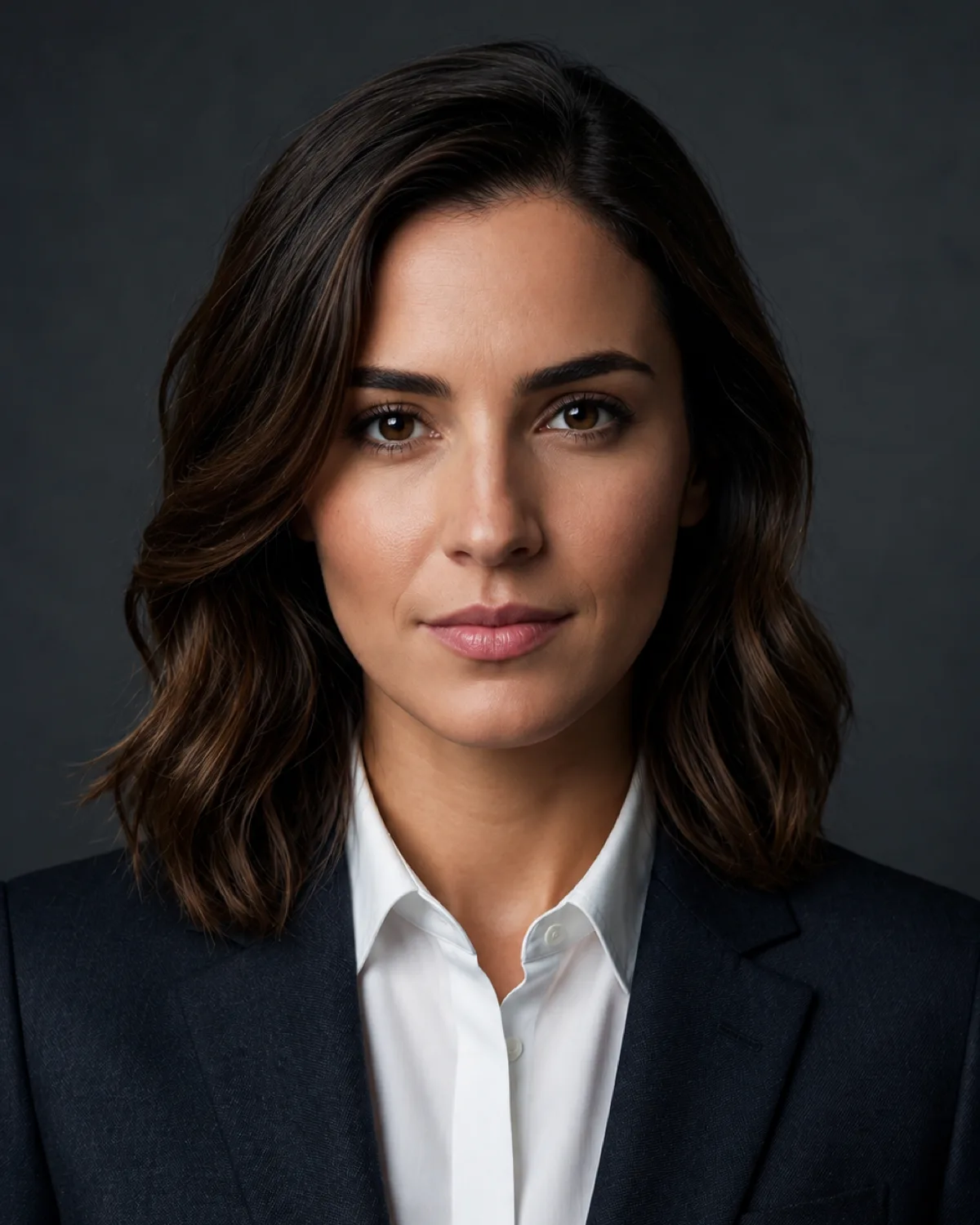
Executive Studio Headshot Portrait
Photorealistic executive headshot in a navy suit against a dark studio backdrop.
Published 7 Aug 2026
Use the attached portrait only as the identity reference for the person. Preserve her recognizable facial features, natural proportions, skin tone, eye color, hair color, and overall likeness with high accuracy.

Scene and Composition

Create a polished, photorealistic executive studio portrait framed from the upper chest upward. Position the subject centrally, facing the camera directly with her shoulders squared and posture upright. Keep the composition balanced and nearly symmetrical, with the eyes placed slightly above the vertical center of the frame.

The subject should look calm, confident, approachable, and professionally composed. Her lips are gently closed with the slightest natural smile, and she maintains direct eye contact with the camera.

Wardrobe

Dress her in:

A tailored, dark navy business blazer with subtle woven fabric texture
A crisp white collared dress shirt underneath
No visible jewelry or distracting accessories

The clothing should fit naturally and communicate a sophisticated corporate or leadership presence.

Hair and Grooming

Style her hair as shoulder-length, softly layered dark-brown hair with loose, natural waves. Create a subtle side part, with the hair framing both sides of her face and resting neatly around her shoulders. Keep individual strands realistic and refined without making the hairstyle look overly perfect.

Use understated professional makeup:

Even, natural-looking complexion
Softly defined eyebrows
Subtle eyeliner and mascara
Neutral blush
Muted rose-pink lips
No heavy contouring or glossy editorial makeup

Retain realistic pores, fine facial lines, and natural skin texture.

Background

Place the subject against a seamless dark charcoal-gray studio backdrop. Give the background a very subtle mottled or softly textured appearance, with gentle tonal variation rather than a perfectly flat color.

The area behind the head should be slightly lighter, creating natural separation from the dark hair and blazer. Allow the edges and corners of the background to fall into deeper shadow.

Lighting

Use refined professional portrait lighting:

A large, soft key light positioned slightly above and to one side of the camera
Gentle fill light to preserve detail in the shadowed side of the face
Very subtle separation light around the hair and shoulders
Soft, realistic catchlights in both eyes
Smooth transitions between highlights and shadows
No harsh shadows, blown highlights, or artificial-looking skin glow

The face should be evenly illuminated while retaining delicate facial depth and dimensionality.

Camera and Photographic Style

Reproduce the appearance of a premium full-frame studio photograph captured with an 85mm portrait lens. Use a moderately shallow depth of field so the face, eyes, hairline, shirt collar, and upper blazer remain sharply detailed while the background stays softly defocused.

Prioritize:

Precise focus on the eyes
Realistic facial anatomy
Natural skin color and texture
Fine hair detail
Accurate fabric texture
Subtle cinematic contrast
Neutral, professional color grading
High dynamic range without an HDR appearance
Sophisticated corporate headshot photography
Photorealistic, high-resolution finish
Avoid

Do not alter the person’s identity or noticeably reshape her facial structure. Avoid plastic skin, excessive retouching, exaggerated makeup, artificial symmetry, warped clothing, stray accessories, dramatic smiling, visible teeth, harsh rim lighting, colorful backgrounds, environmental office elements, text, logos, watermarks, or painterly and illustrated effects. --ar 9:16
Pick an aspect ratio and the prompt updates automatically before you copy it.
Weekly newsletter
Get prompts like this every week
One professional AI prompt every Friday — plus the occasional workflow tip. No spam, unsubscribe anytime.
Join a growing list of creators and founders.